
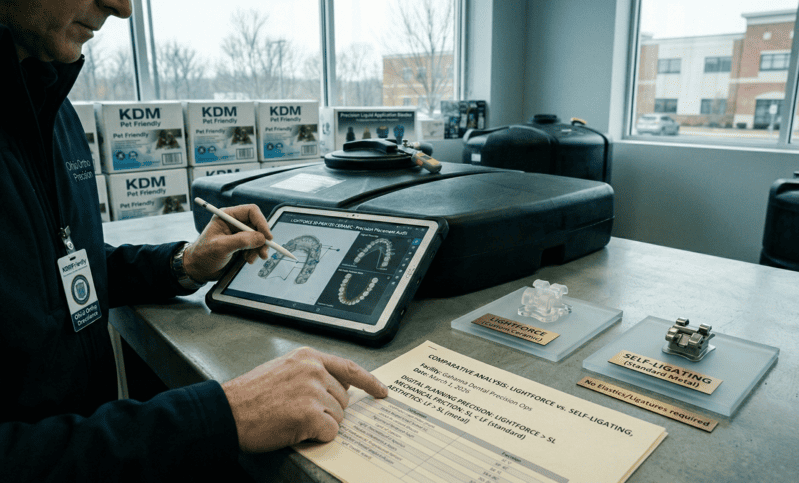
When it comes to orthodontic treatment, braces are no longer one-size-fits-all. Two popular modern options are LightForce braces and self-ligating braces. While both aim to straighten teeth efficiently and comfortably, they differ significantly in customization, technology, mechanics, and overall treatment experience.
LightForce braces are fully customized 3D-printed ceramic brackets designed specifically for each patient. Using digital scans and advanced treatment planning software, every bracket is tailored to the exact shape and position of the individual tooth. This precision allows orthodontists to program tooth movement more accurately from the beginning of treatment. Because the brackets are custom-made, they are often smaller, more discreet, and designed to minimize excess bonding material. The result can be improved comfort, better fit, and potentially fewer adjustments throughout treatment.
Self-ligating braces, on the other hand, are not custom-printed for each tooth. Instead, they use standardized brackets that feature a built-in sliding mechanism or “door” to hold the archwire in place. Unlike traditional braces that require elastic bands (ligatures) to secure the wire, self-ligating systems eliminate these rubber ties. This design reduces friction between the wire and bracket, which may allow teeth to move more freely and may shorten appointment times because there are no elastics to replace.
One of the biggest differences lies in customization. LightForce braces are entirely individualized, meaning the bracket placement and prescription are digitally planned for optimal efficiency. This level of personalization can lead to more precise tooth movement and potentially shorter treatment times in certain cases. Self-ligating braces rely on a universal bracket design and depend more heavily on the orthodontist’s manual placement and wire adjustments to achieve desired results.
Aesthetic appearance is another key distinction. LightForce brackets are typically made from tooth-colored ceramic material, making them less noticeable than many metal self-ligating systems. While some self-ligating braces are available in ceramic versions, many are stainless steel and more visible.
In terms of comfort and hygiene, self-ligating braces may have an advantage because they do not use elastic ties, which can trap plaque and discolor over time. LightForce braces, although ceramic and smooth, still require ligatures unless paired with specific wire systems. However, because LightForce brackets are custom-designed to fit each tooth’s surface precisely, they may reduce irritation caused by bulky hardware.
Appointment frequency can also differ. LightForce’s digital planning often means fewer mid-course corrections, while self-ligating braces can allow quicker wire changes due to their clip mechanism. Both systems aim to improve efficiency compared to traditional braces, but they achieve it through different methods—LightForce through digital customization, and self-ligating braces through mechanical innovation.
In summary, LightForce braces focus on precision and personalization through 3D printing and digital planning, offering a highly customized treatment approach. Self-ligating braces emphasize reduced friction and convenience through built-in wire clips and elimination of elastic ties. The best option depends on individual dental needs, aesthetic preferences, and the orthodontist’s recommendation.