
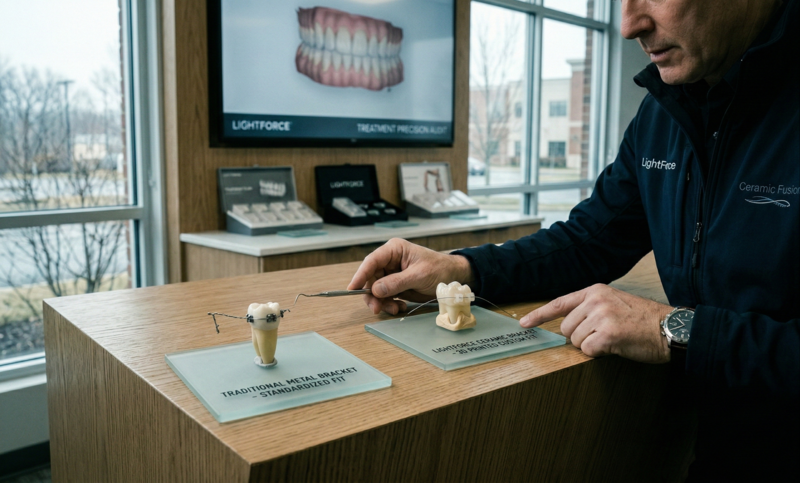
Orthodontic treatment has evolved significantly over the past few decades, with new technologies improving both effectiveness and patient comfort. Among these innovations, LightForce braces represent a major leap forward from traditional metal braces. While both systems aim to align teeth and create a healthy bite, LightForce braces differ in design, customization, comfort, and treatment efficiency. Understanding these differences helps patients make informed choices about their orthodontic care.
Customization and Design
One of the most significant differences between LightForce braces and regular braces lies in their level of customization. Traditional braces are mass-produced, using standard metal brackets that are manually adjusted by orthodontists throughout treatment. Each patient receives roughly the same type of bracket, regardless of their unique tooth shape or alignment.
In contrast, LightForce braces are fully customized for each patient using advanced digital 3D printing technology. The orthodontist takes a digital scan of the patient’s mouth, and from that scan, custom brackets are designed to fit perfectly on each individual tooth. This means that every bracket is specifically shaped and positioned to deliver the most precise movement possible. The high degree of customization allows for more efficient tooth movement and can reduce the need for manual adjustments over time.
Material and Appearance
Regular braces are traditionally made of stainless steel, which is strong but highly visible. Some patients opt for cosmetic variations, such as ceramic brackets, yet even these can appear bulky or prone to staining.
LightForce braces, on the other hand, are made from a 3D-printed ceramic material that matches the color of natural teeth. This gives them a far more aesthetic and discreet appearance. Because the ceramic is translucent and blends with tooth enamel, LightForce braces are much less noticeable than conventional metal options. For patients concerned with appearance—especially adults seeking orthodontic care—this is a major advantage/
Comfort and Fit
With regular braces, the brackets are manually placed and often require multiple adjustments as the teeth shift. The uniform shape of metal brackets can sometimes cause irritation to the lips or gums, especially during the first few weeks of treatment.
LightForce braces improve comfort due to their custom fit. Since each bracket is shaped precisely to the tooth’s surface, there is less friction and irritation. Additionally, because of their tailored design, the forces applied to move the teeth tend to be more evenly distributed, reducing soreness after adjustments.
Treatment Efficiency and Results
Another notable benefit is treatment efficiency. The precision of LightForce technology allows orthodontists to predict tooth movement more accurately and plan treatment digitally before it even begins. This means fewer in-office adjustments and, in many cases, a shorter overall treatment time. Regular braces, in contrast, often require more trial-and-error adjustments since the orthodontist must make manual corrections throughout treatment.
Technology and Planning
Finally, LightForce treatment incorporates digital planning software that helps orthodontists visualize the final outcome before starting. This approach is similar to how clear aligner systems like Invisalign are designed. Regular braces depend more on physical evaluations and adjustment appointments, while LightForce uses computer-guided accuracy for faster and more predictable progress.
Conclusion
In summary, LightForce braces differ from regular braces in their design, materials, comfort, and precision. They represent a modern, patient-specific approach to orthodontic treatment by combining the proven effectiveness of braces with the customization and aesthetics made possible by 3D printing technology. For patients seeking a more efficient, comfortable, and discreet orthodontic experience, LightForce braces provide a groundbreaking alternative to traditional metal systems.