
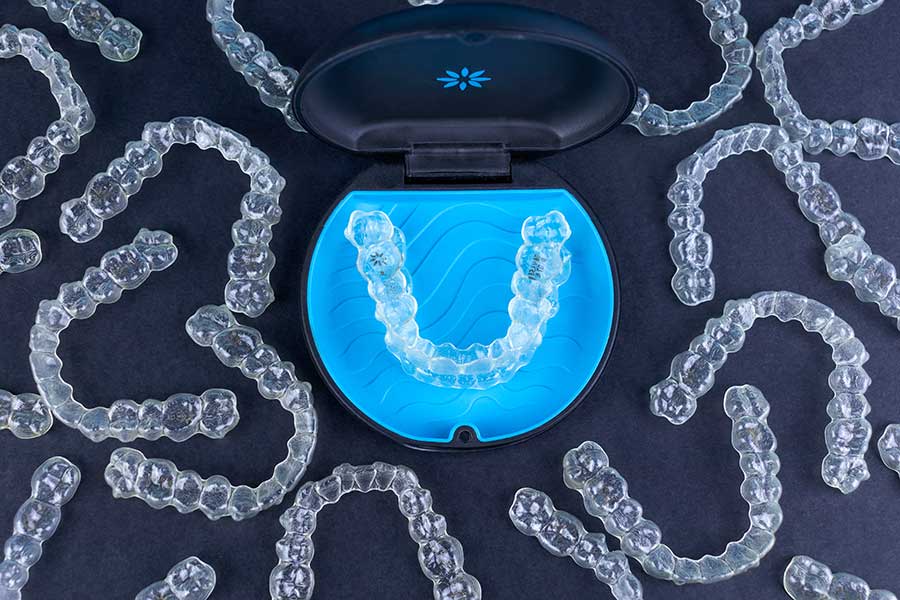
Once we get the braces off or finish treatment with clear aligners and move to retainers, we tend to think that treatment is completed. This is not completely accurate. The active part of treatment where the teeth are being moved into place is done, but retention is part of the treatment continuum and you are still in treatment until you stop wearing your retainers. Retainer wear and the retention period is an important part of treatment. A majority of the retention period of treatment will be unsupervised, as you will have been trained on how to wear and care for the retainers and what wear schedule to follow, so you can self-determine the way you maintain your treatment results.
The purpose of the retainers is to maintain the bite and tooth alignment that was achieved during treatment so the result is preserved long-term. This happens as the bone firms up around the roots of the teeth and the muscles and functional forces adapt to the new tooth position and bite. This takes a while, so you will probably be advised to wear the retainers full-time for a period of time prior to going to night time wear. From night time only wear you may or may not be advised to reduce the frequency of wear over time.
Regardless of the wear schedule, consistent wear as scheduled is the key to successful retention of the treatment result. Inconsistent retainer wear is much less effective than wearing them on a consistent schedule. It’s the consistency that really helps to stabilize the teeth and help them gain the natural stability being sought at the conclusion of active treatment.
Retainers come in all kinds of designs. Some designs are superior to others, and each design has its advantages and disadvantages. Some designs are more effective at accomplishing one of the goals of retention, but may be significantly less effective at accomplishing other objectives. Your orthodontist will determine the best type of retainer for your individual retention needs. Some types may be preferred by orthodontists, while others may be preferred by patients. The bottom line is that the retainer needs to be capable of achieving the goals and objectives set for the retention period.
With the advances in technology and the ability to do durable, well fitting clear retainers, most orthodontists and most patients prefer the clear retainers over the wire and colored acrylic retainers. The clear retainers are much easier to get used to wearing, but have some disadvantages in some cases. Clear retainers will be best type of retainer for a lot of people, and they are very appropriate for most every patient, so that is the style of retainer prescribed most often.