
Orthodontics has made significant advancements, providing patients with multiple options for achieving a straighter smile and better bite alignment. Among the most popular choices today are LightForce braces and Invisalign. Both options are designed to straighten teeth, but they differ in terms of treatment methodology, aesthetics, comfort, and effectiveness. Understanding the key distinctions between these two orthodontic solutions can help patients make an informed decision based on their individual needs and preferences.
Treatment Technology and Customization
The most fundamental difference between LightForce braces and Invisalign lies in the treatment technology used. LightForce braces utilize advanced 3D printing technology, which allows for a highly customized and precise treatment plan. These braces consist of clear, 3D-printed brackets that are specifically tailored to fit each patient’s teeth. The orthodontist designs a digital plan that maps out the most effective tooth movements, and the 3D brackets are created based on this plan. This level of personalization ensures that the force applied to each tooth is optimal, which can often result in shorter treatment times and a more efficient overall process.
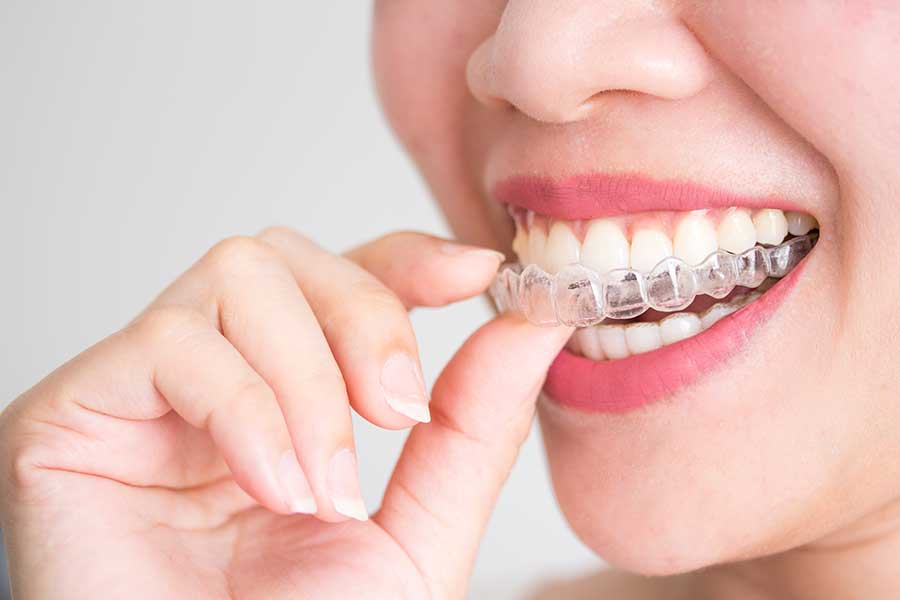
In contrast, Invisalign is based on clear, removable aligners. These aligners are made of smooth plastic and are custom mapped to fit the patient’s teeth. Unlike LightForce braces, Invisalign does not use brackets or wires; instead, the treatment relies on a series of aligners that gradually shift the teeth into position over time. Each aligner is worn for about one to two weeks before moving on to the next in the series. While both LightForce and Invisalign are highly customizable, the technology behind LightForce braces allows for a more detailed level of customization since each bracket is designed specifically for the patient’s teeth.
Aesthetics and Comfort
Aesthetics are an important consideration for many people when choosing an orthodontic treatment, and both LightForce braces and Invisalign offer advantages over traditional metal braces. LightForce braces are made from clear, tooth-colored materials that blend with the natural color of the teeth. This makes them less noticeable than traditional metal braces, providing a more discreet option for those seeking more aesthetic treatment.
Invisalign, on the other hand, is known for being nearly invisible. The aligners are made from clear plastic and are designed to fit snugly over the teeth, making them virtually undetectable when worn. For individuals who are particularly concerned about the appearance of braces, Invisalign is often the preferred choice due to its minimal visibility.
In terms of comfort, both options are designed to be more comfortable than traditional braces. LightForce braces, being smaller and custom-fitted, minimize irritation to the gums and the inside of the mouth. However, patients may still experience some discomfort as their teeth shift. Invisalign aligners are smooth and comfortable, with no metal or wires that could cause irritation. Additionally, since the aligners are removable, patients can take them out to eat and brush their teeth, which can contribute to an enhanced sense of comfort and convenience.
Treatment Effectiveness and Duration
Both LightForce braces and Invisalign are effective in treating a wide range of orthodontic issues, including crowded teeth, gaps, and bite problems. However, the effectiveness of each treatment can vary depending on the complexity of the case.
LightForce braces are often recommended for patients with more complex or severe dental issues. The customized, precise application of force through the 3D-printed brackets can allow for more controlled and efficient tooth movement. As a result, patients with complicated cases may see quicker results with LightForce compared to Invisalign.
Invisalign is typically more effective for mild to moderate dental issues, such as slight crowding or minor bite misalignments. While Invisalign can be used for a variety of cases, it may not be as effective for more complex situations, particularly those that require significant tooth movement or adjustments to the bite. Additionally, the success of Invisalign largely depends on patient compliance; since the aligners are removable, patients must wear them for at least 20 to 22 hours per day to ensure optimal results.
Cost and Maintenance
In terms of cost, both LightForce braces and Invisalign can be more expensive than traditional metal braces, though Invisalign tends to be slightly pricier due to the advanced technology involved in creating the aligners. LightForce braces, with their 3D customization, also come at a higher price point, but the faster treatment times and potential for fewer orthodontic visits might make them more cost-effective in the long run.
Maintenance for Invisalign requires regular cleaning of the aligners and adherence to a strict wear schedule. LightForce braces, being fixed appliances, require periodic adjustments by the orthodontist but generally do not require as much at-home maintenance.
Conclusion
In conclusion, LightForce braces and Invisalign are two innovative orthodontic treatments that provide distinct benefits depending on the patient’s needs. LightForce braces offer a highly customized and efficient treatment option for those with complex cases, while Invisalign is an attractive choice for patients looking for a discreet, comfortable solution for mild to moderate misalignments. Ultimately, the choice between LightForce braces and Invisalign depends on individual factors such as the severity of the orthodontic issue, aesthetic preferences, and budget. Consulting with an orthodontist can help determine which option will deliver the best results based on a patient’s unique circumstances.