
Orthodontic Specialist Hailey ID | Twin Falls Braces and Invisalign

For every full start, we will donate $50 to a charity of choice. Schedule a free consultation and start your treatment to help the community today! Learn more

Lightforce Braces

What they are & how they work

Lightforce Braces
LightForce braces are customized fixed braces. They begin with a 3D digital scan of your teeth. Based on that scan, each bracket is 3D‑printed to precisely fit each tooth. The brackets are bonded to your teeth, and wires or archwires exert force to gradually move the teeth into place. The custom fit of the bracket‑for‑tooth base aims to improve precision, comfort, and efficiency.
Invisalign Touch-up Treatment

Invisalign braces

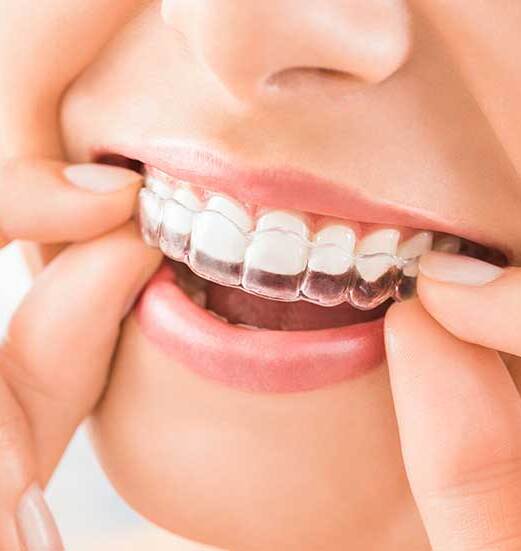
Invisalign uses a series of clear, removable plastic aligners (trays). Using a digital scan (or impressions), a sequence of aligners is designed; each aligner moves the teeth a small amount. You wear each aligner for a prescribed period (often about 1‑2 weeks), then switch to the next in the series. The aligners must be worn the majority of the day (often 20‑22 hours) for the treatment to work well.

Feature

LightForce braces

Invisalign

Aesthetics

More discreet than metal braces because the brackets are ceramic or tooth‑colored; less obvious than old‑school metal braces. But they are still fixed to the teeth and visible.
Very discreet; aligners are nearly invisible and removable, which many patients prefer for appearance.

Comfort

Custom brackets reduce bulk and may lessen irritation. But since braces are fixed, there can still be some discomfort, especially after wire adjustments.
Aligners are smooth plastic, generally more comfortable. No wires or brackets that irritate the soft tissues. But there can be discomfort when switching aligners.
Responsibility / Compliance
Because the braces are fixed, the patient cannot “forget” to wear them—they are always working. Less reliant on patient discipline in terms of wearing time.
Requires high compliance: aligners must be worn most of the day; removing them too often slows progress. If not worn as prescribed, treatment could take much longer or have suboptimal results.
Treatment control & complexity

Offers more control for complex tooth movements, severe misalignments, root movements, and vertical/bite issues. The 3D‑printed, customized brackets plus wires allow fine control that fixed systems generally afford.

Works very well for mild to moderate alignment issues and some bite corrections, but in very complex cases, or where large tooth movement or bite changes are needed, fixed braces may be more predictable. 

Oral hygiene & diet

Fixed braces complicate cleaning; certain foods must be avoided (hard, sticky, chewy). More meticulous oral hygiene needed.

Because you remove aligners when eating and cleaning, better ease of brushing/flossing. Fewer dietary restrictions.

Treatment time & visits

The custom design and more precise bracket placement can lead to shorter treatment times in many cases and potentially fewer orthodontic visits.

Treatment time depends heavily on how faithfully you wear them; missing wear time or not switching aligners on schedule can lengthen treatment. Also, sometimes refinements or adjustments are needed.

Cost

Typically more expensive than basic metal braces; cost tends to be high because of customization. But possibly less than Invisalign in some cases, depending on provider, region, and complexity.

Often one of the more expensive options among orthodontic treatments, because of the cost of producing aligners and follow‑ups; price can vary a lot. 

Which cases are better for each

Lightforce Braces

Are likely a better fit when:

  • The orthodontic issue is complex (severe crowding, rotations, vertical/bite problems).
  • The patient may have difficulty keeping up with wearing removable appliances.
  • Faster, predictable results are a priority.
  • The patient wants a more discreet braces option but still prefers fixed appliances.

Invisalign Touch-up Treatment

Invisalign braces

Might be ideal when:

  • The issues are mild to moderate.
  • Appearance/discretion is a big concern.
  • The patient is disciplined and motivated (can comply with hours required).
  • Oral hygiene or food restrictions are important considerations.