
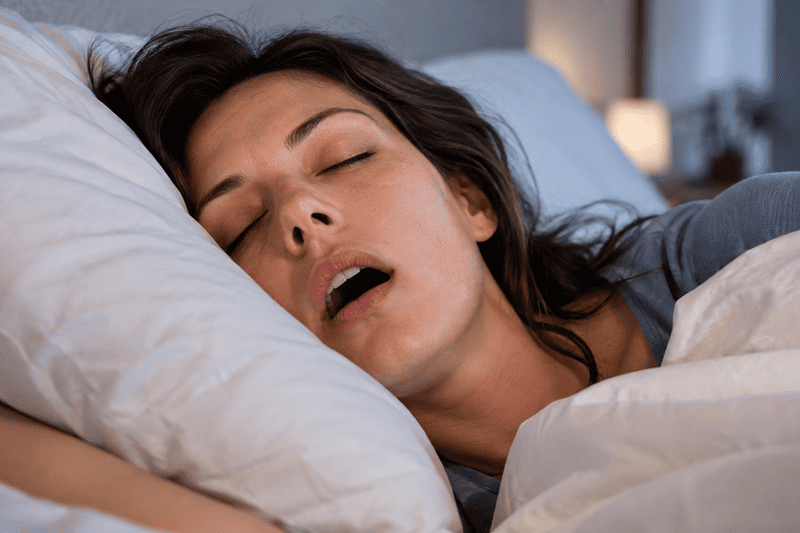
Sleep-disordered breathing (SDB) is a group of conditions in which a person has difficulty breathing normally during sleep. One of the most common forms is obstructive sleep apnea, which occurs when the airway becomes partially or completely blocked while a person is sleeping. Although SDB is often associated with snoring, several important signs can also be seen in and around the mouth. Dentists and other healthcare professionals may notice these signs during routine examinations, making the mouth an important area for identifying possible breathing problems during sleep.
One common oral sign of sleep-disordered breathing is mouth breathing. People who have difficulty breathing through their nose may sleep with their mouth open. Chronic mouth breathing can cause the mouth to become dry, particularly because saliva evaporates more quickly when the mouth remains open. A person may wake up with a dry mouth, sticky feeling, or an increased need to drink water during the night or in the morning. Reduced saliva can also contribute to bad breath and increase the risk of tooth decay.
Another possible sign is a high or narrow palate. When a person consistently breathes through their mouth, particularly during childhood, the position of the tongue and surrounding oral muscles may be affected. This can contribute to changes in the shape and development of the upper jaw. A narrow palate may also be associated with dental crowding because there is less room for the teeth to develop normally.
Dental crowding and malocclusion, or an abnormal bite, can also be associated with airway problems. Teeth that overlap, an unusually narrow dental arch, or differences in the way the upper and lower teeth meet may sometimes indicate altered oral and facial development. These findings do not prove that someone has sleep-disordered breathing, but they can be useful clues when considered alongside other symptoms.
Enlarged tonsils or other tissues near the throat may also contribute to airway obstruction. While these structures are not technically part of the teeth or mouth, they can often be seen during an oral examination. In children especially, enlarged tonsils and adenoids can make nighttime breathing more difficult and may be associated with snoring, restless sleep, and open-mouth sleeping.
Other oral symptoms may include morning headaches, a sore or dry throat, bad breath, and excessive saliva or drooling on the pillow. Some people may also grind or clench their teeth during sleep. Tooth grinding, known as bruxism, has been associated with sleep-related breathing disorders, although it can have many other causes.
In conclusion, the mouth can provide several clues that a person may have sleep-disordered breathing. Mouth breathing, dry mouth, a high or narrow palate, dental crowding, abnormal bite patterns, enlarged tonsils, and signs of nighttime bruxism may all warrant further evaluation when combined with symptoms such as snoring or daytime tiredness. These signs alone cannot diagnose SDB, but recognizing them can encourage a person to seek appropriate medical or dental evaluation and, when necessary, a formal sleep assessment.